Body jewelry deals with daily exposure to skin oils, moisture, sweat, cosmetics, and ordinary wear. Even quality pieces can accumulate residue or need occasional attention. Maintaining jewelry properly helps preserve its appearance, while unsuitable cleaning products and unnecessary handling can create problems.
Good piercing jewelry care involves gentle cleaning appropriate to the material, avoiding harsh products, storing spare jewelry safely, checking for damage, and getting professional help when needed. Jewelry in a new or healing piercing generally should remain in place unless a qualified piercer advises otherwise.
Before discussing cleaning methods, it's important to distinguish jewelry care from piercing aftercare.
If you're new to piercings...
You want to keep your new jewelry clean but aren't sure what's safe during healing.
If you wear established piercings...
You notice buildup or dullness and want to restore your jewelry's original appearance.
If you care about quality...
You want your jewelry to stay in good condition without using the wrong products or techniques.
Piercing aftercare concerns healing tissue. Jewelry maintenance concerns the jewelry's condition, cleanliness, and appearance. Those are two different things.
Jewelry worn in a healing piercing should not be removed merely for polishing or routine cleaning. Cleaning around jewelry in a healing piercing should follow appropriate professional aftercare instructions. If your piercing is still healing, it's worth understanding how piercing healing progresses before changing jewelry.
Jewelry from an established piercing may be easier to maintain separately, but removal is not always advisable. Piercings can narrow quickly when jewelry is removed, even after appearing healed.
The right maintenance method depends partly on whether the jewelry can safely be handled or removed. If you're uncertain, ask a professional before forcing anything.
The safest approach depends on whether the jewelry can be removed and what it's made from.
Jewelry in a healing piercing should generally be left in place and cleaned according to appropriate piercing aftercare guidance. For an established piercing, routine hygiene may help remove ordinary buildup without unnecessary removal or manipulation.
Emphasize gentle care. Avoid excessive pressure, twisting, or harsh scrubbing. Let normal washing do most of the work.
When removal is appropriate, follow this cautious approach:
Important: Do not prescribe soaking, detergent, or polishing as universal cleaning methods. Gem settings, coatings, organic materials, and different metals can require different treatment. Surface condition, finish quality, and the specific alloy matter.
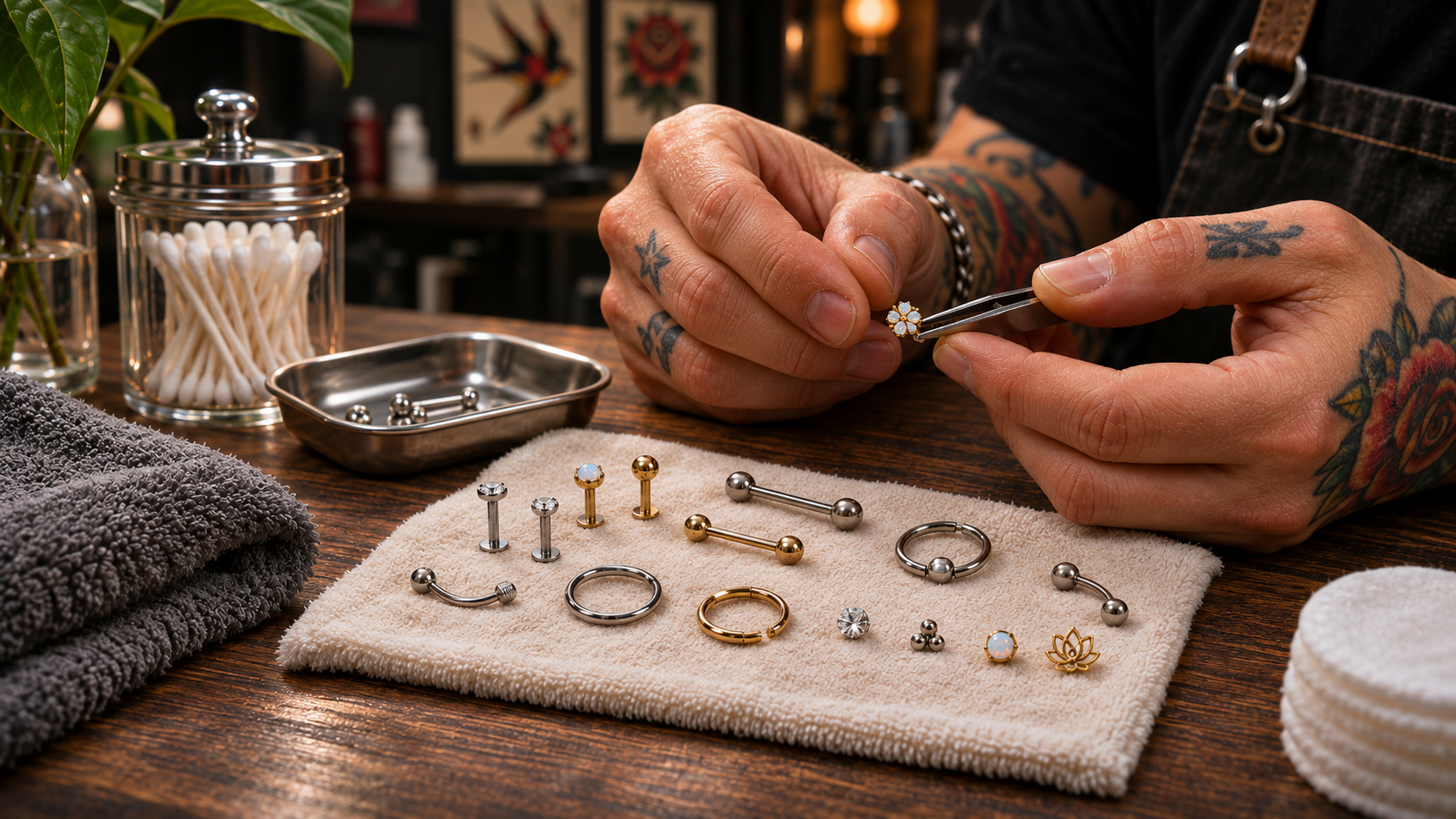
Material matters when choosing maintenance methods. What works for solid titanium may damage plated gold or stones set in adhesive.
Durable, smooth-finished jewelry benefits from routine care that prevents residue from accumulating. Surface condition, finish quality, and the specific alloy matter more than you might expect.
Not all products labeled "surgical steel" are equally suitable. If you're unsure what your jewelry is made from, our guide to piercing jewelry materials and sizing explains the differences.
Solid gold, gold alloys, and gold-plated pieces are not interchangeable. Softer surfaces, finishes, and decorative details may require additional care.
Don't recommend aggressive polishing or chemical cleaners. What restores one finish may damage another.
Stones, settings, adhesives, coatings, and other decorative elements can affect cleaning suitability. Follow the maker's instructions or consult a knowledgeable professional when uncertain.
Material-specific care is safer than assuming one cleaning method works for everything.
How you treat jewelry every day affects how long it stays looking good.
✓ Reduce unnecessary handling
The more you touch, twist, or manipulate jewelry, the more opportunity for irritation or damage.
✓ Watch for product buildup
Keep cosmetics, hairspray, lotions, and other products from accumulating around jewelry when possible.
✓ Prevent snagging
Be mindful of clothing, towels, and accessories catching on jewelry and pulling.
✓ Normal hygiene helps
Keep relevant areas clean as part of normal hygiene without aggressive scrubbing.
✓ Skip household cleaners
Avoid using household cleaners or abrasive polishing products on body jewelry.
✓ Extra care for delicate pieces
Treat decorative or delicate pieces with additional care to preserve their appearance.
Real Example: Product Buildup
Someone wearing a nostril stud or ear jewelry may regularly encounter residue from skincare products, makeup, or hair products. Gentle, appropriate cleaning and avoiding unnecessary handling can help maintain the jewelry's appearance without causing irritation.
Storage matters more than most people realize. Keep spare jewelry in a clean, dry place when appropriate for the material.
Critical distinction: Clean storage is not the same as professional sterilization. Storing jewelry in a pouch or cleaning it at home does not make it sterile or suitable for a new piercing.
Sometimes cleaning alone won't solve the problem. Professional assessment or replacement may be appropriate if jewelry has:
🚩 Scratched, rough, or damaged surfaces that can irritate the piercing
🚩 Loose or missing decorative components that change how the piece fits
🚩 Damaged threads or closures that make jewelry difficult to secure
🚩 Visible deterioration of coatings or finishes that expose underlying metal
🚩 Persistent buildup that can't be removed appropriately
🚩 Jewelry that no longer fits comfortably or causes pressure
Sometimes the right maintenance decision is to stop using a damaged piece rather than attempt to restore it.
Real Example: When Cleaning Isn't Enough
You notice a piece with a rough surface or damaged closure. Professional inspection or replacement can be more appropriate than aggressive cleaning. If certain metals cause discomfort, our guide to choosing piercing jewelry for sensitive skin explores material considerations in more detail.
Safety distinction: Irritation, persistent pain, swelling, discharge, or other concerning symptoms may involve the piercing itself and should not be treated simply as a dirty jewelry problem. Seek appropriate professional or medical evaluation.
Use a cleaning approach appropriate to the jewelry material and whether the piercing is healing. Avoid harsh or abrasive products, prevent unnecessary buildup, and ask a professional when you're unsure.
Yes, but the appropriate method depends on the piercing. Jewelry in a healing piercing should generally stay in place, with care following professional aftercare guidance.
Removal may be appropriate for some established piercings, but even healed piercings can narrow quickly. If removal or reinsertion is difficult, get professional help rather than forcing the jewelry.
Avoid unverified household cleaning solutions, abrasive tools, and methods that could damage the material, finish, or decorative components. Harsh chemicals should not be used on healing piercings.
Professional assessment or replacement may be appropriate if jewelry has damaged surfaces, broken components, deteriorating finishes, or fit problems.
Good jewelry deserves better than random cleaning hacks. Curly's Tattoo Parlor in Athens, GA offers professional piercing services and jewelry options including steel, titanium, and gold pieces.
Talk with the crew about jewelry quality, fit, style, and available choices. Whether you're considering an upgrade or have questions about a piece you're wearing, we're here to help.
Visit Curly's in Athens or call to talk with the crew about what you're wearing or what you're looking for.
Book a Session

