
You got the piercing you wanted, followed every aftercare rule, and kept it clean—but it’s still angry, red, and won’t heal right. Before you blame your body or bad luck, check your jewelry. Most “sensitive skin” problems aren’t skin problems at all—they’re metal allergies nobody warned you about.
This guide breaks down which metals work for reactive skin, which ones secretly contain nickel (looking at you, “surgical steel”), and how to swap jewelry without making things worse. No material science degree needed—just straight talk about what goes in your body and why it matters.
Cheap earrings turn your lobes green. Belt buckles give you a rash. Necklaces make your neck itch. You know your skin doesn’t play nice with certain metals, but you’re not sure which ones are safe for a fresh piercing.
You got pierced months ago, followed every care instruction, but it’s still red, crusty, or bumpy. You’ve tried everything except questioning the jewelry itself—which might be the actual problem.
You want to start with the right jewelry from day one instead of dealing with problems later. Smart move. Knowing which materials work for sensitive skin before you get pierced saves time, money, and a lot of frustration.
Nickel is the most common metal allergen on the planet. It’s also hidden in almost every “affordable” piece of body jewelry you’ll find online or in mall kiosks. Even metals that sound safe—surgical steel, white gold, sterling silver—can contain nickel or other irritants.
Here’s the kicker: nickel allergies can develop over time. You might wear surgical steel jewelry for years with no issue, then suddenly your body decides it’s done. Once you’re sensitized, the reaction gets worse with every exposure.
Why This Matters for Fresh Piercings: A healing piercing is an open wound. Nickel exposure during healing can sensitize you for life, meaning you’ll react to nickel in jewelry, belt buckles, and even some foods. Starting with nickel-free jewelry isn’t just about comfort—it’s about preventing a permanent problem.
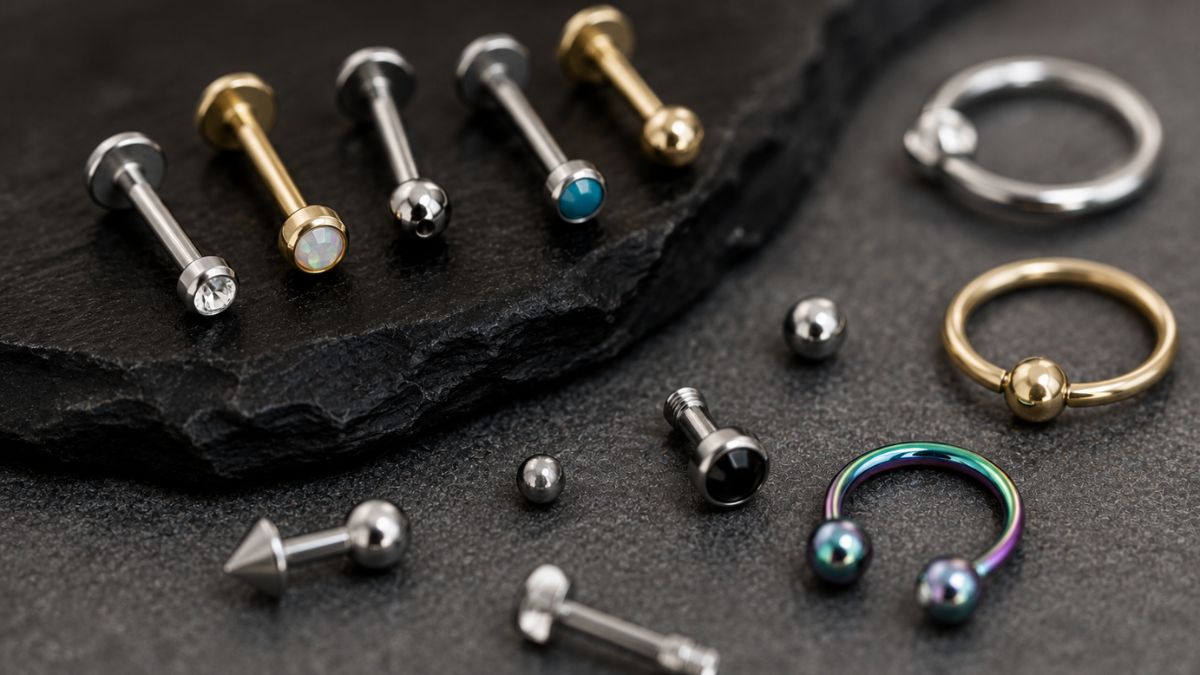
Not all metals are created equal. These three are the only ones you should consider for new, healing, or temperamental piercings if you have sensitive skin.
ASTM F136 titanium is the gold standard. It’s hypoallergenic, biocompatible (meaning your body won’t reject it), lightweight, and contains zero nickel.
Real gold—not plated, not filled—is naturally hypoallergenic. Yellow gold is the purest option; white gold may contain nickel depending on the alloy.
Similar to titanium—biocompatible, nickel-free, hypoallergenic. Slightly heavier and less common, but just as safe. Often used for curved jewelry like eyebrow rings.
Pro Tip: When shopping for jewelry, ask for the material certification. Reputable shops and brands will provide mill certificates proving the metal grade. If they can’t or won’t, walk away. For more on how to evaluate piercing jewelry quality and sizing, we’ve got a full breakdown.
These metals sound safe but are the most common culprits behind piercing problems. If you have sensitive skin, steer clear—especially during healing.
🚩
Despite the medical-sounding name, surgical steel contains 8–12% nickel. It’s cheap and durable, which is why it’s everywhere—but it’s a nightmare for sensitive skin.
🚩
The gold layer wears off quickly, exposing the nickel-containing base metal underneath. You might be fine for a week, then suddenly develop a reaction as the plating breaks down.
🚩
Silver tarnishes, can cause argyria (permanent skin discoloration), and often contains copper or nickel. Never wear silver in a piercing, healed or not.
🚩
If the listing says “alloy,” “fashion jewelry,” or doesn’t specify the metal grade, assume it contains nickel. Amazon specials, mall kiosks, and Claire’s-style jewelry fall into this category.
All piercings are a little red and tender at first. But there’s a difference between normal healing irritation and a full-blown metal allergy. Here’s how to tell.
When in Doubt: If your piercing isn’t healing right and you’re wearing surgical steel or unknown metal jewelry, switch to titanium. If symptoms improve within a week or two, you had a metal allergy. If they don’t, visit your piercer or a dermatologist—it might be an infection or another issue. Learn more about what’s normal during the piercing healing process.
If you suspect your jewelry is causing problems, you need to swap it—but timing and technique matter. Do it wrong and you’ll set back your healing or cause an infection.
Step 1: Get the Right Replacement
Buy implant-grade titanium jewelry in the correct size. Wrong gauge or length can cause pressure, migration, or tearing. If you’re unsure, bring your current jewelry to a piercer and have them match it.
Step 2: Have a Professional Do It (If Possible)
For fresh or healing piercings, let your piercer handle the swap. They have the tools, the experience, and sterile equipment. DIY jewelry changes on unhealed piercings often lead to trauma, prolonged healing, or infections.
Step 3: If You Must DIY (Healed Piercings Only)
Wash your hands. Clean the new jewelry with saline. Work gently—if it hurts or resists, stop and see a piercer. Forcing jewelry through a tight or irritated hole can cause tearing or scarring.
Step 4: Monitor for Improvement
After switching to titanium, you should see noticeable improvement within 1–2 weeks. Redness should fade, itching should stop, and crusties should decrease. If symptoms persist or worsen, see a professional—there may be another issue at play.
Our professional piercing services include jewelry consultation and safe swaps for clients dealing with reactions or sizing issues. We stock implant-grade titanium in multiple gauges and styles—no ordering, no waiting, no guesswork.
Implant-grade titanium (ASTM F136) is the gold standard. It’s hypoallergenic, biocompatible, lightweight, and contains no nickel. Other safe options include 14k or 18k solid gold (not plated) and niobium. Avoid surgical steel, which can contain nickel despite its medical-sounding name.
Yes. Surgical steel contains 8–12% nickel, which is the most common metal allergen. Many people with sensitive skin develop reactions to surgical steel jewelry even if they’ve worn it before without issues. Nickel allergies can develop over time with repeated exposure.
Signs of a metal allergy include persistent redness, itching, dry or scaly skin around the piercing, burning sensation, fluid discharge, or bumps that won’t heal. These symptoms continue or worsen despite proper aftercare. If you suspect a reaction, switch to implant-grade titanium jewelry and consult your piercer.
No. Gold-plated jewelry wears down quickly, exposing the base metal underneath (usually nickel-containing alloys). This can cause allergic reactions and irritation. For new or healing piercings, only solid 14k or 18k gold, implant-grade titanium, or niobium should be used.
Sterling silver is not recommended for any piercing, healed or not, especially for sensitive skin. Silver tarnishes, can cause argyria (skin discoloration), and often contains nickel or copper that can trigger reactions. Stick with titanium, niobium, or solid gold even in healed piercings.
For healed piercings, yes—but wash your hands thoroughly, use clean jewelry, and work gently. For fresh or healing piercings, have a professional piercer do it. Forcing jewelry through a swollen or irritated piercing can cause tearing, trauma, or infection. When in doubt, get help.
If the problem is a metal allergy, yes—you should see improvement within 1–2 weeks. If symptoms persist or worsen after switching, the issue may be infection, trauma, improper jewelry size, or another underlying problem. In that case, see your piercer or a doctor.
At Curly’s, we don’t sell cheap jewelry or guess at materials. Every piece we use for piercings is implant-grade titanium or solid gold—certified, documented, and built to last. Whether you’re getting a new piercing, dealing with a reaction, or need a jewelry upgrade, we’ll help you find what actually works for your body.
No judgment, no pressure, no mystery metals. Just real answers and quality jewelry that won’t let you down.
Or swing by the shop—no appointment needed. We’ll talk jewelry, answer questions, and get you sorted out.


