
Your first cartilage piercing can be an exciting step beyond standard lobe jewelry. But there's more to consider than picking an attractive hoop or stud.
Placement, ear anatomy, starter jewelry, appointment preparation, and lifestyle considerations all matter. Understanding these factors before you commit helps you make informed choices that actually work for your routine.
This cartilage piercing guide covers what first-timers need to know before sitting in the chair.
You're stepping beyond standard lobe piercings and want to understand what makes cartilage different.
You'll learn: Placement options, appropriate starter jewelry, and what to expect during early healing.
You wear helmets, headphones, or glasses daily and need a piercing that works with your routine.
You'll learn: How to choose placement that doesn't create daily frustration or healing problems.
You're planning multiple piercings and want your first cartilage placement to fit a larger design.
You'll learn: How anatomy affects placement, and how to prepare for a professional consultation about your vision.
Your earlobe is soft, flexible tissue. The rest of your ear is cartilage, a firmer structure that doesn't bend the same way.
Cartilage piercings can be placed in several locations: the helix (outer upper rim), forward helix (front of the rim near your face), tragus (small flap covering the ear canal), conch (inner bowl of the ear), and other less common spots.
Cartilage piercings generally require more patience during healing than standard lobe piercings. They typically take several months to a year or longer to fully heal, depending on placement and individual factors.
If you want a closer look at different ear piercing placements, that guide covers specific cartilage locations in detail.
The helix sits on the outer upper rim of your ear. It's one of the most commonly requested cartilage placements for a few practical reasons.
It's relatively accessible for cleaning. The placement offers styling options, from simple studs to hoops once healed. And depending on your specific anatomy, it may avoid some of the pressure issues that affect inner cartilage piercings.
That said, helix piercings are exposed to hair, headphones, helmets, and sleeping pressure. Depending on where exactly the piercing sits on your ear and how you sleep, it may experience more contact than you expect.
Whether a helix works as your first cartilage piercing depends on your ear shape, daily routine, and professional assessment. It's not automatically the "easiest" or least painful option. Suitability depends on the individual.
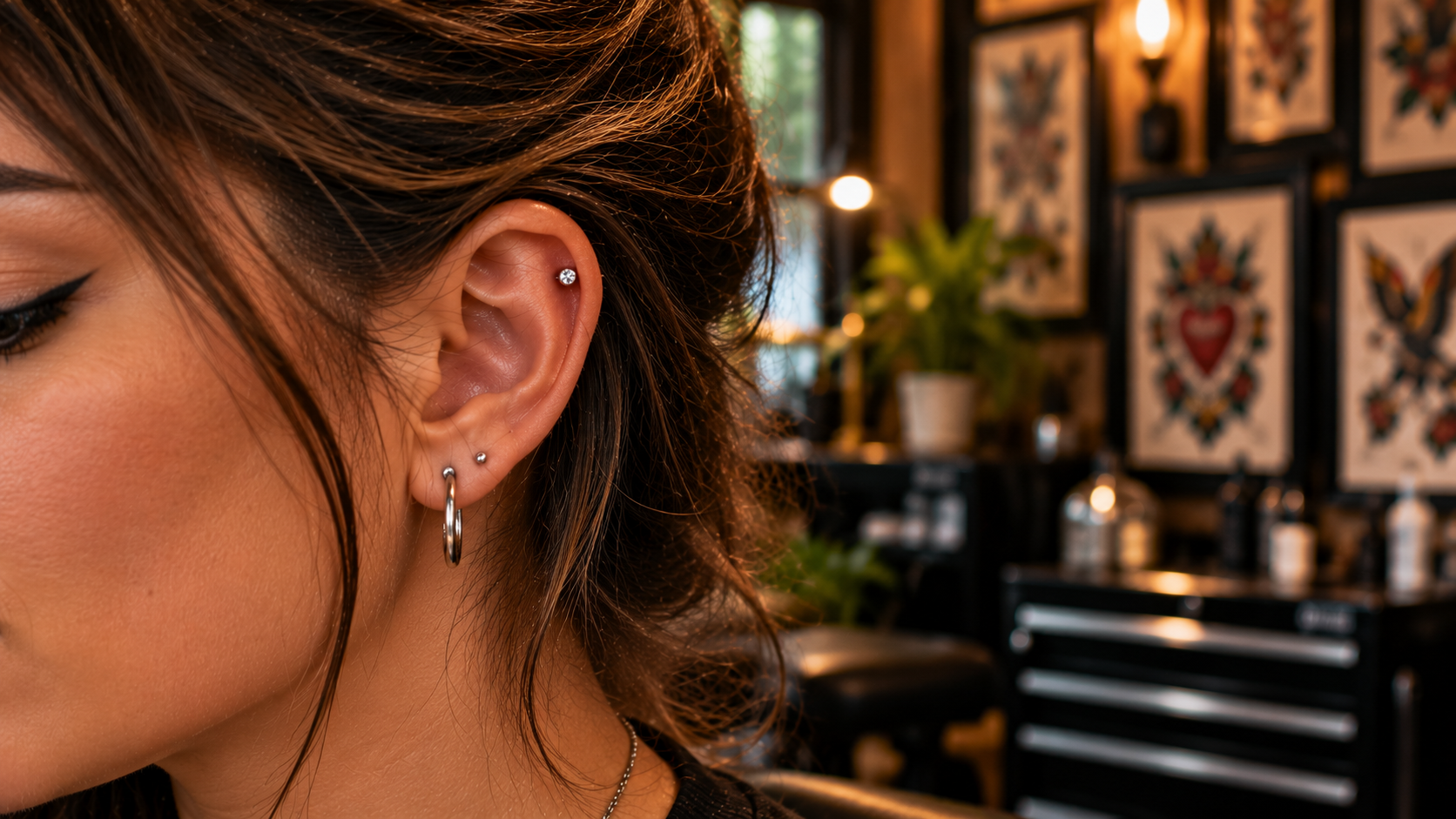
Different cartilage placements interact with everyday life in different ways. Before you choose a location, consider how it fits your actual routine.
Think about your ear shape and cartilage structure. Not everyone's anatomy supports every placement. A professional piercer evaluates whether your specific ear can accommodate the piercing you're considering.
Consider items you wear daily. Do you wear glasses? How do the arms sit against your ears? Do you use earbuds or over-ear headphones for hours each day? Do you wear helmets or other protective equipment for work or sports?
Hair matters too. If you tuck your hair behind your ears frequently, or if you have thick hair that catches on jewelry, that affects which placements work best.
Your preferred sleeping side is another factor. Pressing your new cartilage piercing against a pillow for hours every night creates unnecessary irritation during healing.
Pro tip: Bring a list of your daily habits to your consultation. A piercer who knows you wear headphones six hours a day or sleep exclusively on your right side can recommend placements that actually work for your life.
Initial jewelry isn't just about appearance. Material, fit, gauge, and style all affect how your piercing heals.
Implant-grade titanium meeting ASTM F136 or ISO 5832-3 specifications is commonly recommended for new piercings. It's verified biocompatible and doesn't contain the nickel or other alloys that can cause irritation.
Terms like "hypoallergenic" or "surgical steel" don't guarantee safety on their own. Not all products labeled surgical steel meet appropriate body jewelry standards. Ask what specific material standards the jewelry meets.
Other materials may be appropriate under professional guidance, but starting with verified implant-grade materials gives you the best foundation.
Starter jewelry must be chosen for the specific placement and your anatomy. A properly fitted flat-back labret may be appropriate for many helix piercings, but no single style suits every cartilage location.
Hoops may be suitable in some circumstances, but they're not universally recommended for every fresh cartilage piercing. Movement and rotation during early healing can cause irritation. Your piercer will assess what works best for your situation.
Initial jewelry needs suitable length, diameter, gauge, and room for expected swelling. Too tight and it creates pressure. Too long and it snags on everything.
Your piercer sizes jewelry based on your specific anatomy and the placement. Once initial swelling decreases, you may need to return for a jewelry fit check or possible downsize to prevent snagging and irritation.
Calm, informed preparation matters more than trying to appear fearless. Here's what actually helps.
Important: Do not discontinue prescribed medications to prepare for a piercing. If you take blood thinners or other medications that might affect bleeding or healing, discuss this with your piercer and follow your doctor's guidance.
Here's the general process, though exact procedures and shop policies may vary.
Professional piercing needles are preferred over piercing guns for cartilage. According to the Association of Professional Piercers, piercing guns can cause tissue damage, create more trauma, and use jewelry that doesn't meet appropriate healing standards.
People commonly report a brief sharp sensation, pressure, tenderness, or throbbing. Pain experience varies significantly between individuals.
Placement, anatomy, technique, anxiety, and individual sensitivity all affect how a cartilage piercing feels. Some people describe it as a quick pinch. Others find it more intense but still manageable.
There's no universal pain score that applies to everyone. What feels like a 3 out of 10 to one person might feel like a 6 to someone else.
It's okay to be nervous. Discuss your concerns with your piercer before the appointment. They'd rather answer your questions than have you sit there anxious and holding your breath.
Initial tenderness, localized swelling, mild bruising, and temporary sensitivity are common. Your ear may feel warm or slightly throbbing for the first day or two.
Avoid unnecessary pressure. Don't sleep directly on the new piercing if you can help it. Be careful when pulling shirts over your head or brushing hair near the area.
Minimize snagging. Pay attention when putting on or removing hats, hoodies, scarves, and headphones. Catching jewelry on fabric hurts and creates setbacks.
Follow the individualized aftercare instructions your piercer provides. General advice is useful, but your piercer knows the specific placement, jewelry, and your anatomy.
If you want detailed information on what to expect throughout the piercing healing process, that guide covers timelines and healing stages for different placements.
When to seek help:
Severe or worsening pain, spreading redness, fever, significant swelling beyond the first few days, or concerning discharge warrant prompt medical evaluation. Cartilage infections can require timely medical care. Don't dismiss serious symptoms as routine healing.
A professional piercer expects questions. These five help you make an informed decision:
Speak up if you're uncertain. Good piercers would rather answer twenty questions than have you leave confused.
Your first cartilage piercing should start with good information and an honest conversation. Understanding placement, jewelry, and what to expect helps you make choices that actually work for your life.
Come talk with the team at Curly's Tattoo Parlor in Athens about your placement ideas and find out what works for your anatomy and routine. No pressure, no pitch. Just real answers to your questions.
Discuss placement, jewelry, and your questions with a professional piercer.
Book a SessionA helix piercing is a specific type of cartilage piercing located on the outer upper rim of the ear. All helix piercings are cartilage piercings, but not all cartilage piercings are helix piercings. Your ear has multiple cartilage locations including the forward helix, tragus, and conch.
Initial jewelry should be chosen based on your specific anatomy and placement. While hoops may be appropriate in some circumstances, a properly fitted flat-back labret is often recommended for healing cartilage piercings. Your piercer will assess what works best for your situation.
It depends on the piercing location and your headphone style. Certain cartilage placements may experience pressure from over-ear headphones or earbuds during early healing. Discuss your daily headphone use with your piercer when choosing placement so they can recommend a location that works with your routine.
A professional piercer evaluates your ear anatomy, cartilage structure, existing piercings, and lifestyle factors to determine suitable placements. Not every cartilage location works for every person. An in-person consultation allows your piercer to assess your anatomy and discuss realistic options.


