You can have a killer tattoo idea and still end up disappointed if it lands in the wrong spot.
The best tattoo placement isn't simply the part of your body that looks coolest in a photo. A good placement works with the design, fits the natural shape of your body, gives the artwork enough room to breathe, makes sense for how visible you want it to be, and still works with whatever tattoos you might want later.
Whether this is your first tattoo or you're figuring out where the next piece fits, this guide will help you think beyond "arm or leg?" and choose a spot that actually works.
You've got the idea and the excitement but you're not sure where it should go. You want someone to explain what actually matters without making you feel clueless.
You need: Guidance on design size, body anatomy considerations, and how visible you want your first piece to be.
You've already got ink and you're thinking about the next piece—or maybe working toward a sleeve or larger project. You don't want to mess up future possibilities with a bad placement decision now.
You need: Strategic thinking about how this tattoo fits with existing work and future plans.
You're stuck between two or three different placements and trying to figure out which one makes the most sense for your design, lifestyle, and long-term vision.
You need: Real factors to consider—not just vibes—so you can make a confident decision.
Start with four things: the design, your body, visibility, and your lifestyle.
A tattoo isn't a sticker slapped onto a flat surface. Your body bends, twists, changes, gets exposed to the sun, rubs against clothing, and gives an artist different amounts of usable space depending on the area.
Before settling on a placement, ask yourself:
You don't need to have every answer figured out before talking to an artist. That's part of what the consultation is for.
💡 Pro Tip: Bring your design ideas into the shop even if you're still deciding on placement. An artist can look at your anatomy, the design itself, and your goals, then talk through what works and what doesn't before you commit.
One of the biggest mistakes you can make is getting attached to an exact size and placement before an artist has looked at the design.
Different designs naturally fit different parts of the body.
A tall, narrow piece may flow beautifully along a forearm, calf, or upper arm. A wider composition might make more sense across the chest, back, thigh, or shoulder. A tiny design with limited detail can fit into spaces where an intricate portrait simply won't.
The more detailed the artwork becomes, the more room your artist may recommend giving it.
That doesn't mean every tattoo needs to be huge. Small tattoos can look badass when the artwork is actually designed for the available space.
The goal isn't to make your tattoo bigger than you want. It's to give the artwork enough space to do its job.
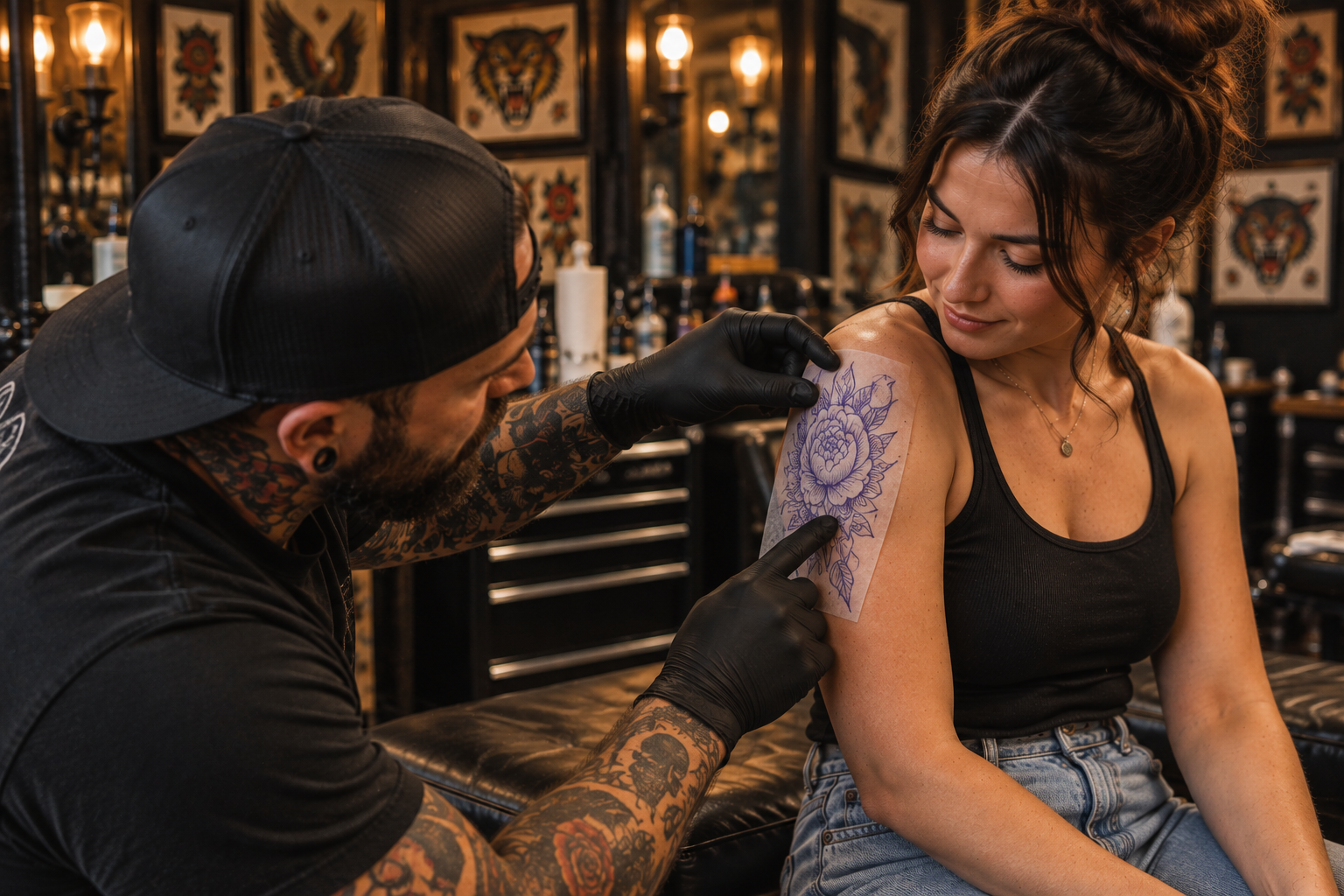
Good tattoo placement follows anatomy.
Arms, shoulders, thighs, ribs, backs, chests, and calves all have different shapes and natural lines. An experienced tattoo artist can adjust the orientation, size, and composition of a design so it looks like it belongs on your body instead of floating awkwardly on top of it.
This matters even more with larger work.
A tattoo that wraps around an arm needs to be considered from multiple angles. Shoulder pieces may need to interact with the curve of the deltoid. Chest and back pieces have larger canvases, but their composition still needs to account for the body's center lines and movement.
That's why we don't believe every tattoo idea should be copied exactly from a reference photo. Bring the reference. Bring five of them if you want. But give your artist room to figure out how the idea works on you.
⚠️ Important: A stencil gives you the chance to catch something that doesn't feel right before it becomes permanent. Move around. Look in the mirror. Let your arm hang naturally. Check it from more than one angle before saying yes.
Some people want their tattoos impossible to miss. Others want the option to cover them.
Neither choice is better.
Forearms, hands, necks, and lower legs can put artwork front and center depending on what you're wearing. The upper arm, torso, thigh, back, and other more covered areas can give you greater control over when the tattoo is visible.
Think about your actual life rather than some imaginary rule about where you're "supposed" to get tattooed.
Does your workplace have appearance policies? Do you regularly attend situations where you'd prefer the option of covering your ink? Or is visibility exactly the point?
Be realistic now so you're not fighting your own decision later.
And remember: your life can change. The job you have at 21 might not be the job you have at 31. That doesn't mean you need to hide every tattoo. It just means visibility deserves a little thought before committing.
Your tattoo has to live the same life you do.
If you spend a ton of time outdoors, think about how much sun a particular area regularly receives. If you wear equipment or clothing that repeatedly rubs against one area, that's worth discussing with your artist. The same goes for people whose hobbies, sports, or work put certain parts of the body through constant friction and exposure.
This is particularly relevant during healing, when you'll need to follow your artist's instructions and give the tattoo the environment it needs to recover.
Lifestyle shouldn't scare you away from a placement you love. It simply gives you another piece of information to consider.
Every tattoo changes somewhat as skin changes over time. Good placement decisions account for that instead of pretending your skin is a permanent sheet of paper.
Design matters here just as much as location.
Tiny details packed too tightly into a small space can become harder to read as a tattoo ages. Giving lines and important elements enough breathing room can help preserve the design's clarity.
💡 Smart Move: If longevity is a major priority, talk to your artist about design, scale, line weight, contrast, and placement together rather than trying to solve each one separately.
Areas that receive frequent sun exposure can also demand more long-term attention. Protecting healed tattoos from excessive UV exposure is a smart habit wherever your ink lives.
If there's even a decent chance you'll eventually want a sleeve, back piece, patchwork collection, or other larger project, say something now.
You don't need a ten-year tattoo master plan.
But placing a small standalone tattoo directly in the middle of prime real estate can make a future large composition harder to build around.
For example, somebody considering a full arm project later may benefit from thinking differently about where today's tattoo sits than somebody who only wants one isolated forearm piece.
A little planning now can leave your artist a hell of a lot more freedom later.
There isn't one universally perfect location, but different areas offer different creative possibilities.
Plenty of versatility for standalone designs and artwork that may eventually become part of something larger. Good balance of visibility control and canvas size.
Great visibility and a natural space for designs with vertical flow. Because it's prominent, think carefully about orientation and how the piece looks with your arm relaxed.
A generous canvas that can accommodate larger or more detailed artwork while remaining relatively easy to cover with clothing.
Useful vertical space for designs that benefit from a taller composition. Visibility depends on whether you're in shorts or pants.
Offers room for bold standalone pieces, symmetrical work, or designs that interact with the body's natural center line.
One of the largest canvases available and a strong option when the artwork needs substantial room. Easily covered but only visible when you choose.
Can work beautifully for designs that follow the body's vertical lines and curves. Less visible day-to-day, but expect a spicier tattoo session.
Highly visible placements that deserve extra consideration because covering them isn't always easy. Make sure you're genuinely ready before committing.
Those are starting points—not rules.
Your anatomy, existing tattoos, artwork, preferred size, and future plans can completely change which placement makes the most sense.
Orientation is another reason to let your artist mock up the design before committing.
There are traditional composition principles artists may recommend depending on where the tattoo sits and what the subject is doing. But orientation also depends on the design itself, surrounding tattoos, body flow, and how the piece looks from normal viewing angles.
Instead of obsessing over a universal "correct" direction you found online, look at the stencil on your actual body.
A stencil gives you the chance to catch something that doesn't feel right before it becomes permanent.
Good. That's exactly the kind of decision an artist can help with.
Bring the idea into the shop and explain what you're debating. An artist can look at your anatomy, existing tattoos, desired size, and design and explain what each location gives you—or takes away.
For larger custom pieces, an in-person conversation can be especially useful because the artist can actually see the available space instead of trying to estimate everything through a message.
Curly's is an old-school shop with a modern approach. We're not interested in acting like you should already know tattoo terminology or have every decision made before walking through the door.
Consider four main factors: the design itself, your body's anatomy, visibility preferences, and your lifestyle. Think about how large the design needs to be for details to read clearly, whether the shape fits that body part, if you want it visible daily, how work or clothing might affect it, whether you want more tattoos around it later, and how it looks when your body moves naturally.
Absolutely. Different designs naturally fit different body parts. Tall, narrow pieces work well on forearms, calves, or upper arms. Wider compositions suit chests, backs, thighs, or shoulders. More detailed artwork needs more space. The goal is giving the artwork enough room to do its job, not forcing a design into a space where it can't breathe.
Good tattoo placement follows your body's natural lines and shapes. Arms, shoulders, thighs, ribs, backs, chests, and calves all have different contours. An experienced artist adjusts the orientation, size, and composition so the tattoo looks like it belongs on your body instead of floating awkwardly on top of it.
Yes. Think about your actual life rather than imaginary rules. Forearms, hands, necks, and lower legs are highly visible. Upper arms, torso, thighs, and backs offer more control over when tattoos show. Consider workplace policies, situations where you'd prefer coverage, and remember that your life circumstances can change over time.
Your tattoo lives the same life you do. Consider sun exposure if you're outdoors frequently, equipment or clothing that rubs against certain areas, and activities that put body parts through constant friction. This matters especially during healing when the tattoo needs proper care. Lifestyle shouldn't scare you away from a placement you love—it just gives you another piece of information.
If there's a decent chance you'll want a sleeve, back piece, or larger project eventually, mention it now. You don't need a ten-year master plan, but placing a small tattoo in the middle of prime real estate can make future compositions harder to build around. A little planning now gives your artist more freedom later.
Upper arm and shoulder offer versatility. Forearms provide visibility and vertical flow. Thighs accommodate larger detailed work while staying coverable. Calves suit taller compositions. Chests allow bold standalone pieces. Backs offer substantial canvas space. Ribs follow body curves. Hands and necks are highly visible and deserve extra consideration. Your anatomy, existing tattoos, and future plans determine which location makes the most sense.
Orientation depends on the design, body flow, and how the piece looks from normal viewing angles. Instead of following universal rules you found online, look at the stencil on your actual body. Move around, check the mirror, let your arm hang naturally, and view it from multiple angles before committing.
The perfect tattoo placement is the one where the artwork, your anatomy, your lifestyle, and what you want all line up.
Don't choose a location just because somebody on social media looked good with a tattoo there. And don't let somebody else's rules decide where your artwork belongs.
Book a SessionAlready have an idea but can't decide where it belongs? Bring it in and we'll help you figure out how to make it work.

