There's nothing wrong with walking into a tattoo shop, spotting a piece of flash on the wall, and knowing immediately: Yep. That's the one. But tattoos don't have to start that way anymore.
More people are coming into tattoo shops with reference photos, rough sketches, memories, symbols, half-formed ideas, or nothing more than a story they want turned into something permanent. That's where custom tattoos come in—artwork developed around the individual getting tattooed.
And no, that doesn't mean flash is dead. It means tattooing now gives you more ways to make the art your own.
You walk in, see it, want it, get it. No second-guessing. Traditional flash speaks to you, and you respect the history behind those sheets on the wall.
Your move: Browse our flash, pick your piece, and let's tattoo.
You've got an idea—maybe a story, a memory, a symbol—but you need an artist to turn it into something tattoo-worthy. You want collaboration without ego.
Your move: Book a consultation and let's figure this out together.
You know you want a tattoo, but you're not locked into one approach. Maybe you want to see flash and custom options. You're open to what feels right.
Your move: Come in and talk. We'll show you what we've got.
A custom tattoo design is created or substantially developed for an individual client rather than selected as-is from a pre-drawn design.
It might begin with something incredibly specific: "I want a black-and-gray raven with these flowers on my forearm."
Or it might begin with: "I want something for my grandfather. I have no clue what it should look like."
Both are enough to start a conversation.
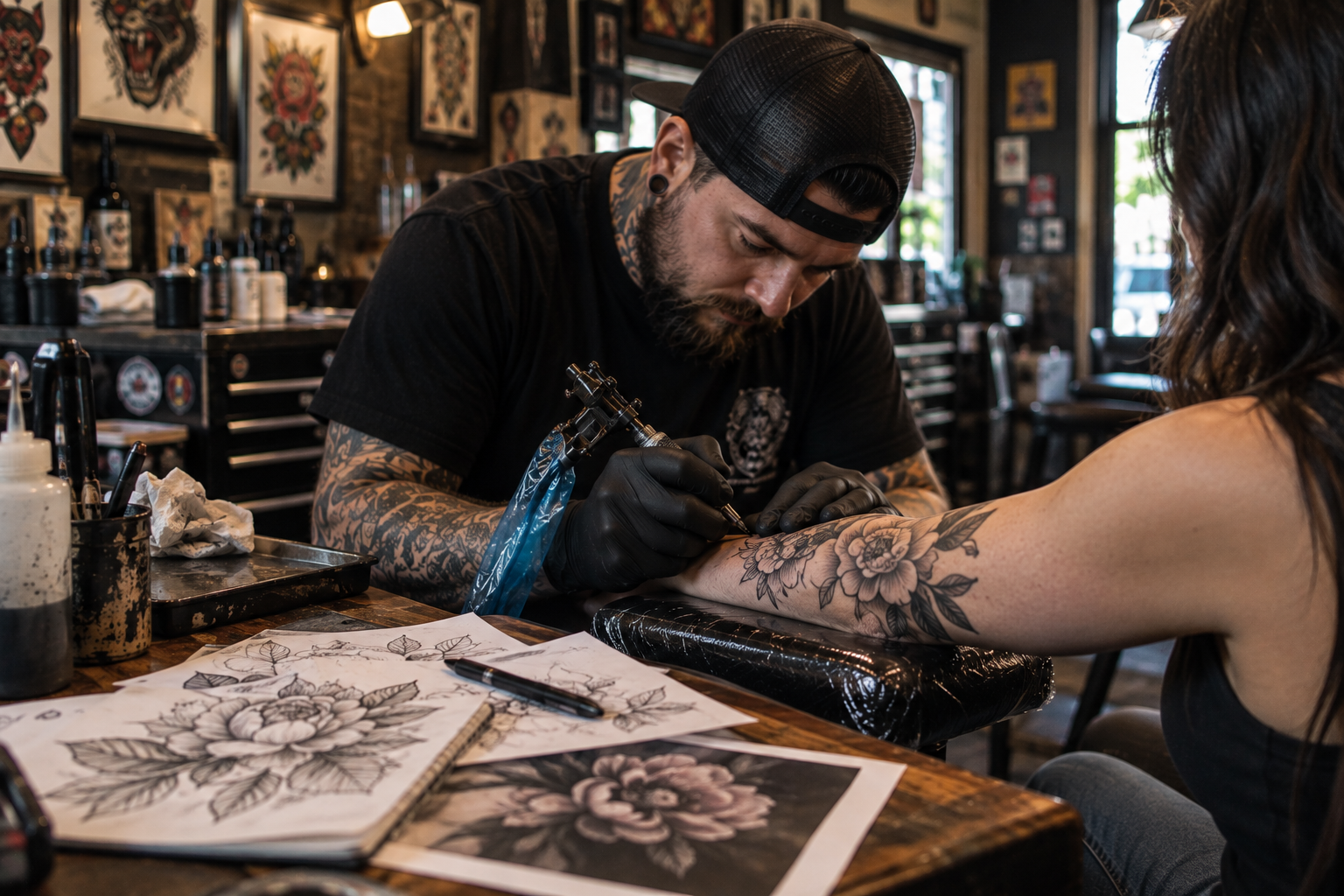
An artist can take your references, story, preferred style, placement, and other ideas and turn them into artwork designed to work as a tattoo. That's an important distinction—something can look badass on your phone and still need changes before it works well on skin.
Hell no.
Flash is part of tattooing's DNA, and it still has a place in modern shops. Traditional flash sheets give clients ready-to-go artwork and can make choosing a tattoo beautifully simple. You see something that hits you, pick it, talk through the details with the artist, and get tattooed.
Custom work offers a different experience. Instead of beginning with a finished image, you're usually beginning with an idea.
The Real Story: Framing this as "custom versus flash" misses the point. One doesn't need to kill the other. At Curly's, we're an old-school shop with a modern approach. We respect the traditions that built tattooing without believing there's only one right way to get tattooed.
Tattoos have become an increasingly personal form of self-expression.
People still get tattooed because something simply looks cool—and that's a perfectly good reason. But tattoos can also represent people, places, milestones, beliefs, memories, interests, loss, change, rebellion, or an inside joke that would make absolutely no sense to anyone else.
Sometimes an existing design captures that perfectly. Sometimes it doesn't.
Custom tattooing gives people more control over how those ideas are translated into artwork. The goal isn't necessarily to create the most complicated tattoo possible. It's to create something that feels right for the person wearing it.
This stops way too many people.
You have an idea in your head, but you can't draw it, so you assume you're not ready to talk to an artist.
That's literally part of the artist's job.
💡 Pro Tip: You can bring:
A good consultation isn't a test of how well you understand tattoo terminology. It's a conversation. The artist asks questions, figures out what matters to you, and starts narrowing the idea into something that can actually be designed and tattooed.
Instagram, Pinterest, Google, and artist portfolios have made finding tattoo inspiration ridiculously easy. That's useful. Bring those references.
What you shouldn't expect is for an artist to photocopy somebody else's tattoo onto you.
⚠️ Worth Knowing: Reference images are better used to communicate what you're drawn to. Maybe it's the composition, shading, subject matter, linework, color palette, or general attitude of the piece. From there, the artist can interpret those influences and develop something suited to your body and idea.
That's how inspiration starts becoming unique tattoos rather than copies of somebody else's work.
Custom tattooing is collaborative, which means choosing an artist matters.
Give three skilled tattoo artists the same concept and you probably won't get three identical drawings. Their experience, visual instincts, preferred techniques, and artistic style all influence how they interpret an idea.
That's a good thing.
What to Look For: Browse portfolios before deciding who you want to work with. Pay attention to more than whether you think the tattoos look cool. Look for work related to the style you're considering and notice how the artist handles composition, lines, shading, color, and different parts of the body.
"Custom tattoo" sometimes makes people picture an enormous back piece requiring 40 hours in the chair.
It can be that. It can also be a two-inch tattoo.
Customization isn't about size. It's about creating or adapting artwork around you.
A small flower incorporating a detail tied to someone important. Simple symbol adjusted for a specific body location.
Traditional subject redrawn with different elements. Personal story translated into half-sleeve composition.
Multi-session back piece or full sleeve. Complex narrative woven through connected imagery over multiple sessions.
The idea doesn't need twelve layers of symbolism to qualify, either. Sometimes you just want a badass tattoo nobody else has. That's enough.
One advantage of working directly with an artist is that the tattoo can be designed with its final location in mind.
Skin isn't a sheet of printer paper. Arms curve. Shoulders round. Chests move. Tattoos wrap around legs. Existing pieces create boundaries that new artwork may need to complement or work around.
An artist may recommend:
That's not the artist hijacking your idea. That's craftsmanship. The strongest custom work happens when your idea and the artist's tattoo knowledge work together.
This is the part of tattoo culture we're glad to see changing.
You shouldn't need to prove you're "tattoo enough" before an artist takes your idea seriously. You also shouldn't feel like asking questions makes you difficult.
At the same time, collaboration means being willing to listen when an experienced artist explains why something may need to change.
🚨 Real Talk: A good artist should be able to explain why something needs adjustment without making you feel stupid. Zero ego doesn't mean zero guidance. It means the guidance is about making your tattoo better—not showing you who's boss.
A custom tattoo is artwork created or substantially developed for an individual client rather than selected as-is from a pre-drawn design. It's developed around your specific idea, story, preferred style, size, and placement through collaboration with your artist.
No. Flash is part of tattooing's DNA and still has a place in modern shops. Custom work and flash serve different purposes—one doesn't need to replace the other. Both are valid ways to get tattooed.
Absolutely not. You can bring reference photos, rough sketches, examples of styles you like, or simply explain your idea. The artist's job is to take your concept and develop it into tattoo-ready artwork. A good consultation is a conversation, not a test.
Reference images are useful for showing what you're drawn to, but artists shouldn't photocopy someone else's tattoo onto you. References help communicate style, composition, and vibe—from there, the artist interprets those influences to create something unique for you.
No. Customization isn't about size or complexity—it's about creating or adapting artwork around you. A custom tattoo can be two inches or a full back piece. The idea doesn't need layers of symbolism to qualify. Sometimes you just want something nobody else has.
Your body becomes part of the design. Skin curves, moves, and has natural boundaries. A good artist designs with placement in mind, adjusting composition, size, and orientation so the tattoo flows with your anatomy and any existing work.
Custom tattoo pricing depends on size, complexity, placement, and the time required. Most shops charge hourly rates or by the piece. During your consultation, the artist can give you a realistic estimate based on your specific design. Good custom work is an investment—prioritize quality over finding the cheapest option.
Timeline varies. After your consultation, the artist needs time to develop the design. Simple pieces might be ready within a week or two. More complex work can take longer, especially if the artist's schedule is booked. The actual tattooing time depends on size and detail—could be one session or multiple appointments spread over weeks or months.
Speak up. A good artist wants you to be stoked about your tattoo. Most artists allow reasonable revisions during the design phase. Be specific about what's not working—"I don't like it" gives the artist nothing to work with, but "the rose needs to be bigger" or "can we change the background shading" gives clear direction. Communication is key.
Flash still matters. Custom tattooing hasn't replaced it. What has changed is the amount of freedom you have. Walk in and fall in love with flash. Spend months building a deeply personal custom concept. Take a classic idea and put your own spin on it. There isn't one correct way to do this. The best tattoo is the one you're stoked to carry when you walk out the door.
Book a SessionNo pressure. No pitch. Just a real conversation about your tattoo.


