
Getting a fresh piercing is the fun part. Figuring out how to sleep without rolling directly onto it at 2 a.m. can be a little less exciting.
If you're sleeping with a new piercing, the biggest goal is simple: keep unnecessary pressure, friction, and snagging away from the area while it settles in. That usually means adjusting your sleep position, keeping your bedding clean, and finding a setup that lets the piercing rest without being smashed into a pillow all night.
You don't need to turn bedtime into a science experiment. A few smart habits can make sleeping with fresh jewelry a hell of a lot more comfortable.
You just got your first piercing and you're excited—but also a little nervous about messing it up while you sleep. You need straightforward advice that doesn't assume you already know the basics.
You've slept on your side for years. Now you've got a new cartilage piercing and waking up with a throbbing ear is not the vibe. You need real solutions that actually work for committed side sleepers.
You're collecting piercings across one or both ears and need to figure out how to keep adding jewelry without making bedtime miserable. You want to know how to plan placements with sleeping in mind.
It's generally better to avoid sleeping directly on a fresh piercing whenever you can.
Pressure from your head or body weight can make the area more irritated, and repeated rubbing against a pillow or blanket can keep aggravating tissue that's trying to settle down.
This matters especially with ear piercings because side sleepers can end up putting several hours of steady pressure on the same spot without realizing it.
⚠️ Wake-Up Reality Check: A piercing may feel fine when you go to bed and feel much more irritated when you wake up simply because you spent half the night lying on it.
The easiest rule?
Give the new piercing some space.
Your normal sleeping position may need to change for a while.
If you usually sleep on the same side as your new ear piercing, try sleeping on your back or the opposite side. If you've had piercings on both ears, sleeping on your back may become your best option.
That sounds easy until you realize you've been a committed side sleeper for the last 15 years.
You may still move around while you're asleep. That's normal. The goal isn't perfection—it's reducing how much time you spend putting pressure directly on fresh jewelry.
For ear piercings, one of the simplest piercing aftercare sleeping tips is to create an empty space around your ear.
A donut-shaped piercing pillow or clean travel pillow can do exactly that.
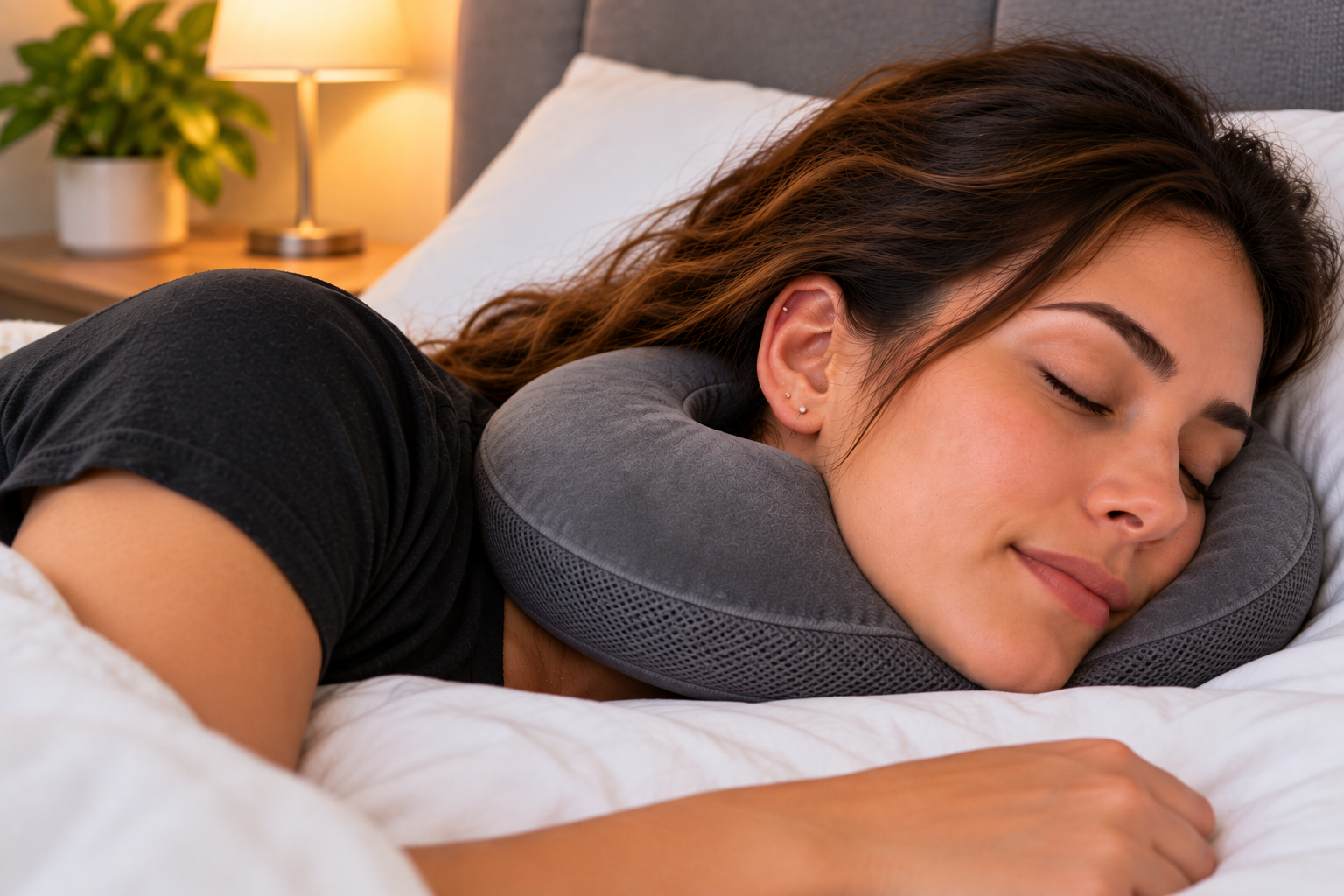
A donut-shaped pillow creates space around your ear so your head is supported while the piercing stays suspended
Instead of your ear pressing into a flat pillow, you position it over the opening so your head is supported while the piercing itself stays suspended.
This can be especially useful for cartilage piercings or for people who absolutely cannot convince themselves to sleep on their backs.
💡 Pro Tip: Just make sure whatever touches your face and ear is clean and comfortable. A clever pillow setup doesn't help much if the fabric itself is dirty or constantly rubbing against the jewelry.
Fresh piercings and dirty bedding are not a great combination.
Your pillowcase collects skin oils, sweat, hair products, makeup, pet hair, and plenty of other stuff you probably don't spend much time thinking about.
When you have a new facial or ear piercing, changing your pillowcase regularly is one of the easiest ways to keep your sleeping environment cleaner.
You don't need to become obsessive about it.
Just don't spend night after night pressing a healing piercing into the same pillowcase while shampoo residue, skincare products, and everything else builds up.
Long hair has an impressive ability to wrap itself around fresh jewelry.
For ear, eyebrow, or other facial piercings, keeping your hair away from the piercing while you sleep can reduce pulling and snagging.
A loose braid, ponytail, or other comfortable style may help depending on your hair.
Avoid anything so tight that it causes tension around your head or makes sleeping uncomfortable. You're just trying to keep strands from winding around the jewelry—not prepare for battle.
The same thinking applies during the day.
If your jewelry is constantly getting caught in your hair, glasses, headphones, clothing, or towels, reducing those snags can make your life a lot easier.
If a fresh piercing is annoying you at bedtime, taking the jewelry out may sound like the easiest solution.
It usually isn't.
🚨 Non-Negotiable: New piercings can begin closing or tightening faster than people expect, and removing or repeatedly changing jewelry can create additional problems. Unless a qualified piercer or healthcare professional specifically tells you otherwise, don't treat your jewelry like something you take out every night and put back in every morning.
If the jewelry feels excessively tight, keeps digging into your skin, or seems like the wrong fit, talk to a professional rather than trying to solve it yourself at midnight.
Your pillow isn't the only thing that can mess with a new piercing overnight.
🚩 Loose blankets
Can catch exposed jewelry when pulling covers up
🚩 Pulling shirts overhead
Can snag ear or facial piercings without warning
🚩 Sleeping in headphones
Puts pressure against new ear jewelry all night
🚩 Aggressive blanket pulling
Can catch piercings if jewelry sticks out
The fix isn't complicated: slow down around the area.
For the first part of the healing process, treat that piercing like a tiny piece of jewelry attached to irritated skin—because that's exactly what it is.
A few seconds of extra care can save you from a surprisingly unpleasant snag.
Ear piercings can be particularly annoying at night because so many people naturally sleep on their sides.
If you're building multiple piercings on one ear, think about your sleeping habits before doing everything at once.
That doesn't mean you can't create the ear setup you want. It means spacing things out or planning which side you're piercing can make the process more manageable.
A professional piercer can also help you think through placement in a way that considers both style and practicality.
Don't panic.
Accidentally rolling onto a new piercing once doesn't automatically mean you've ruined anything.
If you wake up on it, simply reposition yourself and avoid messing with the jewelry unnecessarily.
If the piercing seems irritated afterward, follow the aftercare instructions your piercer gave you and keep an eye on it.
What matters more is repeated pressure night after night.
That's why changing your sleep setup is worth the effort: it reduces the constant irritation rather than trying to eliminate every accidental movement.
Good piercing healing sleep tips are mostly about creating an environment where the piercing can be left alone.
Simple beats complicated.
Your body is doing most of the work. Your job is to stop making that job harder.
Some tenderness and irritation can happen with a fresh piercing, but if something doesn't look or feel right, don't rely on random internet advice to diagnose it.
Contact your piercer if you have questions about jewelry fit, pressure, irritation, or aftercare. If you're concerned about infection or experiencing significant or worsening symptoms, seek medical advice from a qualified healthcare professional.
At Curly's, we'd much rather you ask a question than sit at home stressing over something you're unsure about.
It's generally better to avoid sleeping directly on a fresh piercing whenever you can. Pressure from your head or body weight can make the area more irritated, and repeated rubbing against a pillow or blanket can keep aggravating tissue that's trying to settle down. This matters especially with ear piercings because side sleepers can end up putting several hours of steady pressure on the same spot without realizing it.
No. New piercings can begin closing or tightening faster than people expect, and removing or repeatedly changing jewelry can create additional problems. Unless a qualified piercer or healthcare professional specifically tells you otherwise, don't treat your jewelry like something you take out every night and put back in every morning.
Try sleeping on your back or the opposite side from your new ear piercing. A donut-shaped piercing pillow or clean travel pillow can create an empty space around your ear so your head is supported while the piercing itself stays suspended. Change your pillowcase regularly and keep hair away from the jewelry while you sleep.
Don't panic. Accidentally rolling onto a new piercing once doesn't automatically mean you've ruined anything. If you wake up on it, simply reposition yourself and avoid messing with the jewelry unnecessarily. What matters more is repeated pressure night after night, which is why changing your sleep setup is worth the effort.
Change your pillowcase every 2-3 days when you have a new facial or ear piercing. Your pillowcase collects skin oils, sweat, hair products, and other debris that can irritate a healing piercing. You can also use a clean towel over your pillow each night as an easy alternative.
Avoid wearing headphones or earbuds that press against a new ear piercing, especially while sleeping. The pressure can irritate the area and slow healing. If you need to listen to something at night, try using a speaker or positioning headphones so they don't touch the fresh piercing.
If your piercing is sore when you wake up, you likely slept on it during the night. Follow your aftercare instructions, avoid touching the jewelry unnecessarily, and adjust your sleeping position or pillow setup to prevent repeated pressure. If soreness continues or worsens, contact your piercer for guidance.
Sleeping with a new piercing doesn't need to be miserable.
Avoid putting direct pressure on it, give ear piercings some empty space with the right pillow setup, keep your bedding clean, watch out for snags, and don't constantly mess with your jewelry.
The less unnecessary pressure and friction you throw at it overnight, the easier bedtime is likely to feel while your piercing settles in.
Book a SessionNo pressure. No pitch. Just real conversation.


