Walk into a real tattoo shop and you'll feel something you don't get from scrolling Instagram portfolios. There's artwork on the walls, conversations happening across stations, the buzz of machines, music playing, and someone working through a design idea with their artist. A tattoo shop at its best brings people together around creativity, craftsmanship, and individual stories.
It's not just the place where you get tattooed. It's where artistic collaboration happens out loud, where clients and artists shape ideas together, and where the local creative scene has a physical address.
You're curious about tattoo culture but not sure what to expect when you walk through the door. You want to understand the atmosphere before committing to a piece.
You appreciate independent art spaces and want to understand how tattoo shops contribute to a city's creative identity and local artistic culture.
You've been tattooed before, and you're looking for a shop where the artists have personality, the atmosphere feels right, and the collaboration runs deeper than just booking an appointment.
Tattooing has always been about more than the finished piece. The shop is where artistic traditions get passed down, flash designs get drawn by hand, and distinctive styles develop through collaboration and conversation between artists.
American traditional, black-and-gray, fine line, Japanese work, and every other style grew inside working tattoo shops. Artists learned from each other. They shared techniques. They built portfolios on the walls and created visual identities that became recognizable across cities and decades.
That creative exchange didn't stop. It just looks different now. Modern shops still function as spaces where visual art, personal storytelling, and hands-on craftsmanship come together in one place. The artwork on the walls, the design conversations, and the relationships between artists and clients still shape the culture.
A shop's visual environment tells you something before anyone says a word. Flash sheets, original drawings, framed tattoo designs, photos of finished work, vintage advertisements, and handmade details all contribute to the personality of the place.
The artwork isn't just decoration. It's a portfolio, a conversation starter, and a visual representation of what the artists care about. Clients flip through flash books looking for inspiration. They point to designs on the wall and ask questions about size, placement, or color. They see the artistic range and get a feel for the shop's identity before they commit to anything permanent.
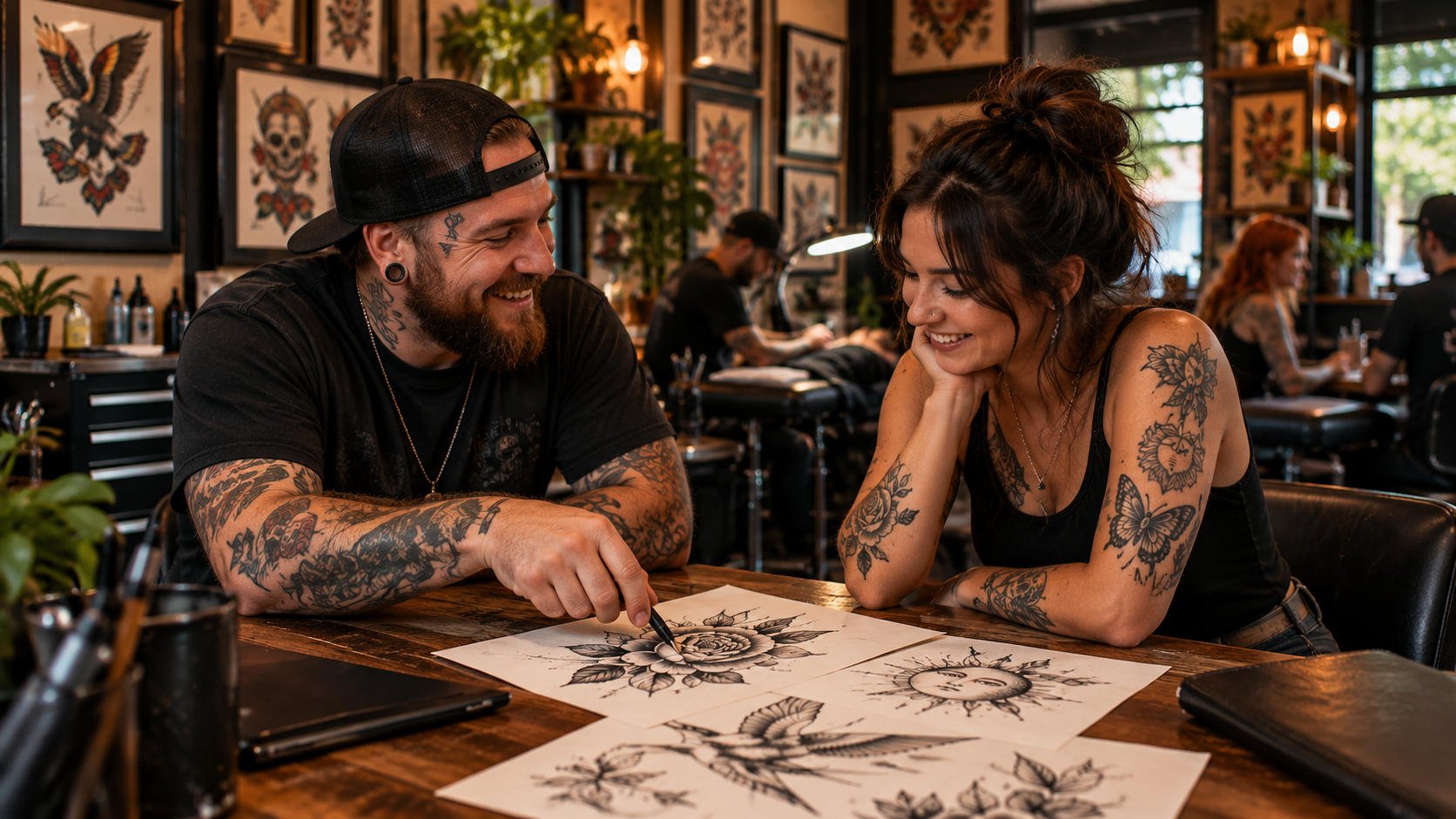
At a place like Curly's, the old-school biker aesthetic shows up in the décor. The woodgrain details, traditional imagery, and handmade touches reflect an appreciation for tattoo history without pretending to be a museum. The space feels lived-in and creative, not corporate.
The best tattoo work happens through collaboration. A client brings an idea, a reference image, a rough sketch, or a personal story. The artist asks questions to understand what the concept means and why it matters. Then they translate that into a design that works as a tattoo.
The client contributes the vision. The artist contributes professional interpretation. They discuss composition, placement, size, contrast, and how the design will age. Sometimes the conversation leads to adjustments that make the tattoo stronger than the original idea.
Real example: A client brings a photo of a flower they want tattooed. The artist suggests modifying the shape and adding bolder line work so the details stay readable as the tattoo heals and ages. The final design honors the client's idea while making it work long-term as body art.
That kind of exchange doesn't happen through email or a submission form. It happens face-to-face, with sketches, references, and conversation. The collaborative process is where the creative community aspect of a tattoo shop becomes most visible.
Tattooing takes time. During that time, people talk. They talk about the design. They talk about their reasons for getting it. They talk about music, work, hobbies, shared interests, and life in general.
Those conversations shape the shop's atmosphere as much as the décor does. Some shops feel laid-back. Some feel intense. Some are louder, some are quieter, but the best ones feel human.
A tattoo artist needs to understand what a client wants before putting permanent artwork on their body. That requires actual communication, not just technical skill. The willingness to listen, ask questions, and talk through ideas builds trust and makes the process feel collaborative instead of transactional.
Independent creative businesses contribute to a city's identity in ways corporate chains never do. They reflect the personality of the people who run them. They develop relationships with regulars. They earn reputations through word of mouth. They become places people remember and recommend.
Tattoo shops fit that mold. A good shop becomes a recognizable part of a neighborhood, not because it's heavily advertised, but because locals know the artists, appreciate the work, and feel comfortable walking through the door.
In Athens, Georgia, where creative businesses and locally owned spots shape the city's character, an independently run tattoo parlor adds to that landscape. It's another place where artistic work happens, where craftsmanship matters, and where people connect around something beyond mass-produced culture.
Curly's operates as an old-school tattoo shop with a modern approach to how clients are treated. The identity leans into American traditional and black-and-gray influences without limiting the range of ideas artists are willing to explore.
The shop welcomes college students, bikers, tradespeople, creatives, first-timers, and experienced collectors. Everyone gets the same level of respect and the same quality of communication. There's no pretension, no gatekeeping, and no pressure to prove you belong in tattoo culture.
The physical space reflects that balance. The décor pays homage to tattoo traditions without turning the shop into a theme park. The atmosphere feels genuine, not manufactured. Artists work on custom pieces and flash designs. Clients bring ideas ranging from memorial tattoos to spontaneous walk-in decisions. The shop functions as a place where artistic work happens and where people feel comfortable being themselves.
If you're curious about the people and personality behind Curly's, the best way to understand it is to experience the shop firsthand. The artwork, the conversations, and the overall vibe tell the story better than any website description.
Social media makes it easy to discover artists and browse portfolios without leaving your couch. That's convenient, and it's helped talented artists reach wider audiences. But tattooing is personal and creative work, and the physical shop offers something Instagram can't replicate.
You get to see the artist's environment. You get to talk through your idea in person. You get to feel the atmosphere and decide whether the shop's personality fits what you're looking for. The community around a tattoo shop exists because people show up, interact with the artists, and become part of the culture by participating in it.
A tattoo shop becomes a community space through shared artwork, creative collaboration between artists and clients, ongoing conversations about personal expression, and a welcoming physical environment where people connect around craftsmanship and individual stories.
The atmosphere shapes how comfortable people feel sharing personal ideas, how openly artists can collaborate on designs, and how much clients enjoy the process beyond just the final tattoo. A shop's visual identity, music, conversations, and overall vibe all contribute to the creative experience.
No. A good tattoo shop welcomes everyone regardless of their knowledge level. Artists are used to explaining styles, answering questions, and guiding first-time clients through the process. Curiosity and honesty matter more than expertise.
A tattoo shop's personality is easier to understand when you experience it. Curious about the people behind the ink? Stop by Curly's Tattoo Parlor in Athens, meet the artists, take in the artwork, and see what we're about.
Explore the tattoo styles and services available at Curly's, or reach out when you're ready to talk through your idea.
Book a Session

